
FIRGELLI - IDEAS IN MOTION
Now shipping from our Australia Warehouse in Sydney
We offer a wide selection of universal Electric Linear Actuators for every application imaginable. Our stroke range options go from 1" (Inch) to 50", and force from 15-lbs to 500-lbs which should support any product integration. We keep everything in stock and ship out the following business day.
FIRGELLI has been developing Linear Actuators of many different types for over two decades. For a larger selection of Actuator, you can also order from our USA website that offers a greater selection and we offer favorable shipping pricing from our USA warehouse, try FIRGELLI USA Linear Actuators.
 Filter
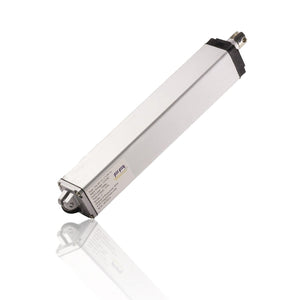
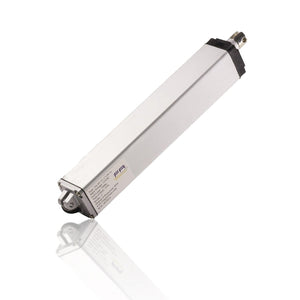
| Variable |
|---|
| Min Force |
| Max Force |
| Max Speed |
| Stroke Options |
| Voltage |
| IP Rating |
| Feedback |
| Price |
Linear Actuators for Reliable Push, Pull, Lift, and Positioning Control
Now shipping from our Australia Warehouse in Sydney
A linear actuator converts motor rotation into controlled straight-line motion. In practical terms, it lets you lift a hatch, slide a panel, open a vent, adjust a workstation, move a machine guard, or automate a mechanism with repeatable extension and retraction.
FIRGELLI Automations has supplied electric linear actuators and motion-control hardware for more than 20 years. This collection is built to help Australian buyers compare actuator types by force, stroke length, speed, feedback, duty cycle, mounting style, and control requirements before choosing a product.

How to Choose the Right Linear Actuator
The right actuator is not simply the strongest one. Oversizing can add cost, current draw, and bulk, while undersizing can shorten service life or prevent the mechanism from moving safely.
- Force: calculate the real load at the mounting angle, including friction and safety margin.
- Stroke length: match the required travel distance without bottoming out the mechanism.
- Speed: choose fast movement for light loads or slower, higher-force movement for demanding jobs.
- Feedback: use potentiometer, Hall sensor, or optical feedback when position tracking or synchronization is required.
Actuator Types for Different Applications
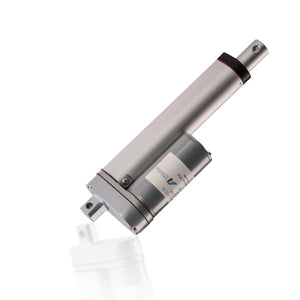
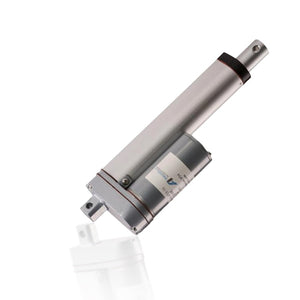
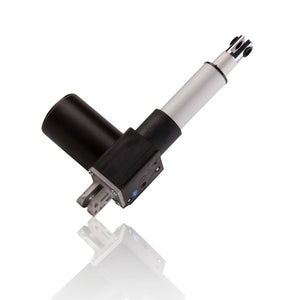
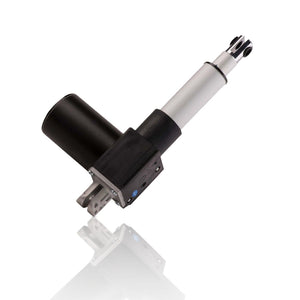
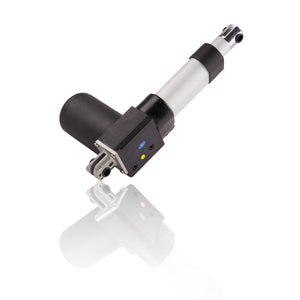
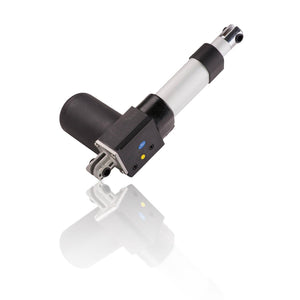
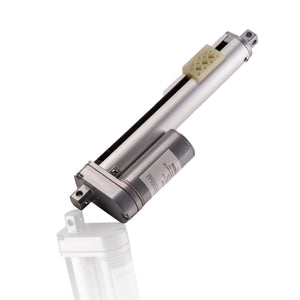
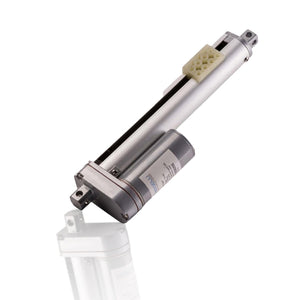
Rod-style actuators are the most common choice for lifting, pushing, pulling, and tilting. Track actuators keep the moving carriage inside the body, which helps where a rod cannot protrude. Mini actuators fit compact designs, while feedback actuators support position-aware control systems.
Explore related categories such as rod actuators, track actuators, mini actuators, and feedback actuators when narrowing your shortlist.


Control, Mounting, and Power Matter
A dependable actuator setup also needs the right brackets, switch, controller, wiring, and power supply. For simple motion, a polarity-reversing switch may be enough. For synchronized movement, adjustable limits, speed control, or timed operation, choose a controller such as FCB-1 or FCB-2.
For sizing help, use the Linear Actuator Calculator, or contact FIRGELLI with sketches, dimensions, load details, and movement goals.
Linear Actuator FAQ
What does a linear actuator do?
It creates straight-line motion from an electric motor, allowing a mechanism to lift, slide, tilt, open, close, push, or pull with controlled travel.
How do I size a linear actuator?
Measure the required stroke, calculate the load at the mounting angle, confirm speed requirements, and add a safety margin. The actuator must fit the available space at both retracted and extended lengths.
Do I need feedback?
Use feedback when you need position tracking, repeatable stops, automation logic, or synchronized movement between multiple actuators. For basic open-close movement, feedback may not be required.
Can I control actuator speed?
Yes. Speed can be managed with compatible controllers depending on actuator type and wiring. FCB-2 and selected speed controllers can help with speed, timing, and limit-control requirements.
Which voltage should I choose?
Most small and medium DC actuator systems use 12V DC, while some applications use 24V DC for lower current draw or system compatibility. Match the actuator, controller, and power supply voltage.
What brackets do I need?
Use brackets designed for the actuator body and clevis ends. Correct bracket alignment reduces side loading, which helps protect the actuator and mounting points.